Begin at the collar and shoulders
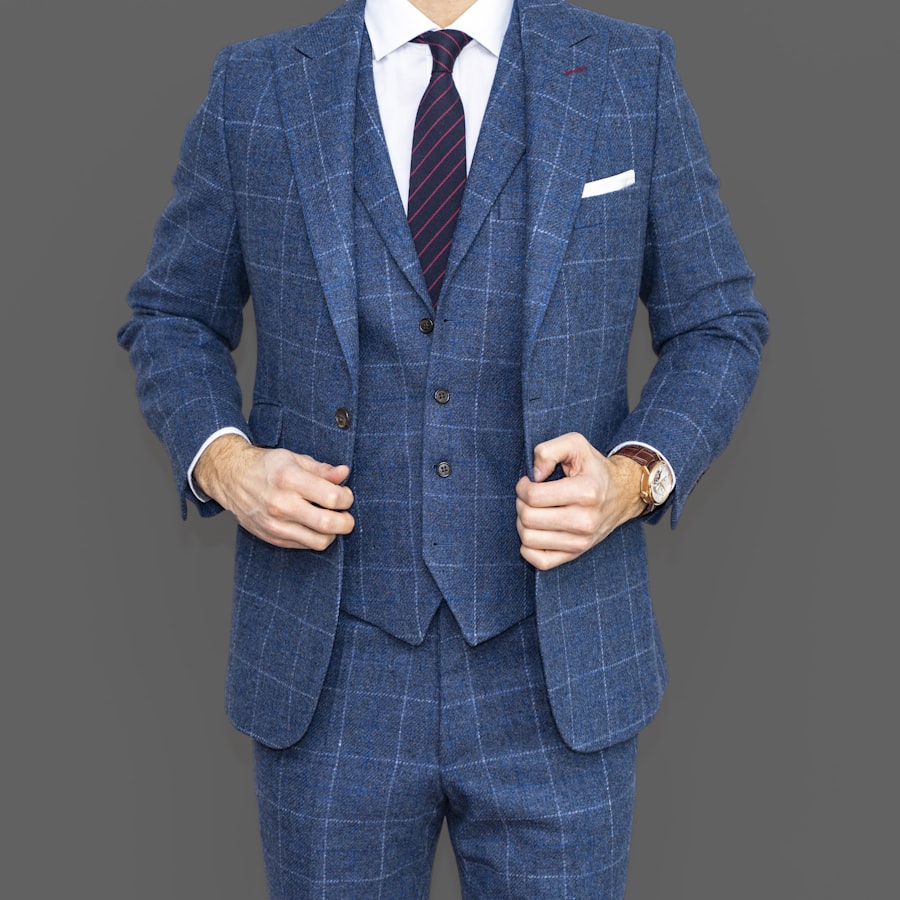
The jacket collar should meet the shirt collar without a large gap or heavy roll below the neck. The shoulder line should end near the wearer’s shoulder and fall without a deep collapse or ridge.
Shoulder changes are among the most complex jacket alterations. When buying a suit, prioritize this area before sleeve length or waist shape.
Check the chest and button
When the jacket is fastened, the lapels should lie flat and the front should not form a strong X around the button. The chest needs enough room to move without excess fabric hanging near the armholes.
A tailor may take in or let out the body depending on seam allowance, but a jacket cannot always be transformed across several sizes without disturbing pockets and balance.
Set sleeves with the shirt in place
Sleeve length is judged against the shirt cuff and the wearer’s arm position. Wear a properly fitting dress shirt to the appointment. Working buttonholes, vents and decorative stitching may affect where the sleeve can be shortened.
If one arm is slightly longer, fitting each side independently can look more balanced than forcing identical measurements.
Trousers complete the silhouette
The waistband should stay in position without excessive belt tension. The seat should remain smooth while leaving room to sit. From there, the leg can be shaped through thigh, knee and calf.
Bring the shoes. Trouser break is the meeting point between fabric and footwear, so it cannot be judged accurately in socks alone.
Sources and further reading
Reporting was reviewed on August 4, 2026. Commentary and tailoring guidance are original to Salimar Fashion and Tailor.