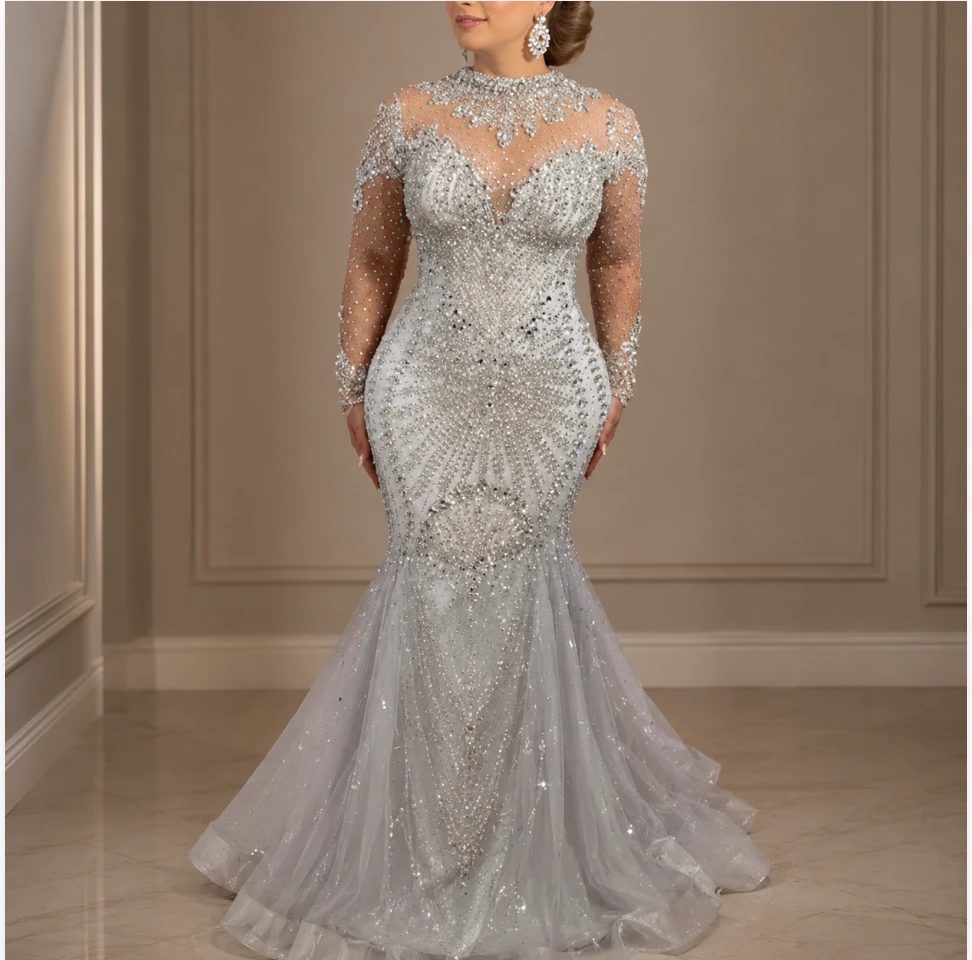
Lace is visible again
Vogue’s coverage of 2026 bridal collections highlights a strong return to lace. The material can create surface, transparency and tradition without requiring a heavily embellished silhouette. It also changes how an alteration must be planned.
A lace hem cannot always be shortened like a plain skirt. A border may need to be lifted and reapplied, while a lace bodice may require motifs or beads to be removed before the seam is opened. Brides should ask how the lace will be handled, not only how many inches will be removed.
The drop waist changes the fitting point
A drop-waist gown extends the fitted bodice below the natural waist before the skirt begins. The effect can be long and sculptural, but it gives the tailor less room to disguise a poor fit. The transition must sit evenly around the body and remain comfortable when the bride sits.
At the fitting, check the torso in motion. A gown that looks smooth while standing may ride upward or fold at the hip when seated.
Alternative bridal looks need tailoring too
Current wedding coverage also shows more suits, separates, strong accessories and nontraditional color. A bridal suit deserves the same planning as a gown: shoe height, trouser break, sleeve exposure and the relationship between jacket and waist all matter in photographs.
Separates offer flexibility, but the pieces should be fitted together. Bring the complete look to every important fitting.
Trend should never outrun the wearer
A wedding garment is seen from the front, back and side, in still photographs and hours of movement. Choose a design because it supports the ceremony and the person wearing it—not because a single image is popular.
Begin alterations early enough for decisions to be careful. Bring the exact shoes and foundation garments, and practice sitting and walking before the final pickup.
Sources and further reading
Reporting was reviewed on August 4, 2026. Commentary and tailoring guidance are original to Salimar Fashion and Tailor.